Sunday, December 14, 2025

Spider Stories

​Copyright 2025 by Michael Auld

Stories are one of the most important gifts to humanity. We cannot exist without the storyteller. As a child growing up in Jamaica we swapped Anansi Stories called “Anansesem” in Ghana where his Asanti exploits were transported to the Americas. How this happened is itself my folkloric comic strip turned into a graphic novel.
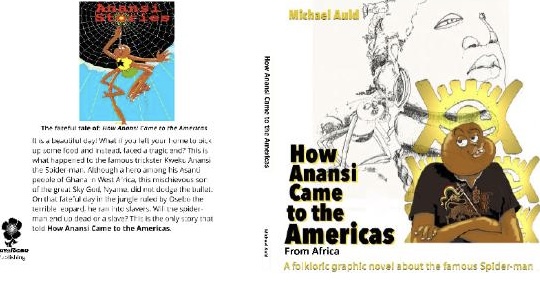

No punches pulled, this graphic novel tells the truth about slavery in which Anansi got caught up. You can see an introduction on my website at http://anansistories.com/How_Anansi_Came_book.html.

But why spider stories? 

It turns out that folkloric spiders are found in many cultures often associated with the Creation of the Universe. Although one spider-woman, the Greek’s Arachne is associated with arachnophobia, a fear of arachnids.

Yet, there are enthusiastic spider lovers.

ABOUT ANANSI
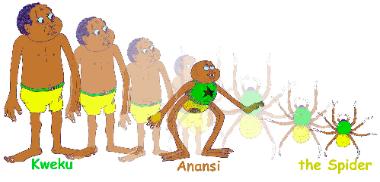
According to Akan storytellers in Ghana, Kwaku Anansi, was born on his day-name for Wednesday. He was once a man, turned into a spider for an infraction against his father, N’yame the Great Sky God. His mother was Asase Ya, the Earth Goddess. His having a web, philosophically, like the Amerindian hammock made him a creature existing between Heaven and Earth. Small in statue but big on brains as the spider-man he had to use his brainpower to outsmart larger brings. So, children naturally identified with Anansi. Since his stories may seem to ridicule a listener, the storyteller had to make a disclaimer, such as, “This is just a story. I’m not pointing out anyone in particular!”

HIS SON TICKY-TICKY

My other novel is about his youngest son, Intikuma, whom I named Ticky-Ticky after the small guppy fish in Jamaica’s sugarcane plantations. They were placed there to keep down mosquitoe larvae.
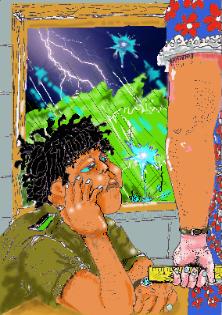
Above: Ticky-Ticky’s classroom distraction causes him to be forced to bring his missing father, Anansi into school before he is expelled.So, his adventure begins.
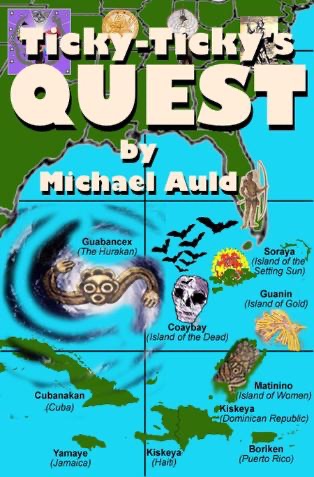
Above: The book’s cover with Caribbean areas visited by Ticky-Ticky’s travel with the search Dog of the Dead and a flying, time traveling bat-canoe loaned to him by his god-relative, Maketaurie Guyaba, God of the Afterlife’s Island of the Dead and the Sweetness of Life’s guava. 

How to get these books as a holiday present!

(1) How Anansi Came to the Americas from Africa https://a.co/d/btoX9qA

(2) Ticky-Ticky’s QUEST Go on an adventure in search for Anansi in the Caribbean’s Taino Island of the Afterlife, then to Haiti’s folkloric icons, Ti Malice and Uncle Bouki, then to the Island of Women and one of Gold.  https://a.co/d/h152lw5
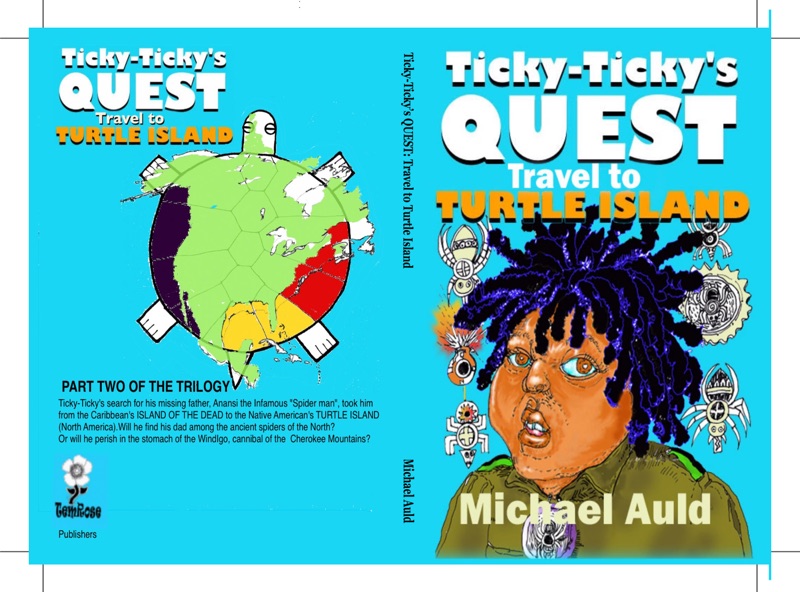
Above: Then off to Bimini. The soon to be published Part 2&3 is a continued combined tale where the hero travels to Turtle Island (North America) then a time travel to ancient Mexico’s Teotihuakan civilization. 

FROM STRIP TO GRAPHIC NOVEL

My success with converting a Anansesem comic strip into a graphic novel has encouraged me to do the same with other stories. 

This story introduces Anansi’s son, his friends and the reader to an early Ghanaian history at the arrival of Europeans who allied themselves with the Denkyera neighbor. The narrative follow young Osei Tutu’s exploits, an escape, and his alliance with Anoychye, the precut m most 
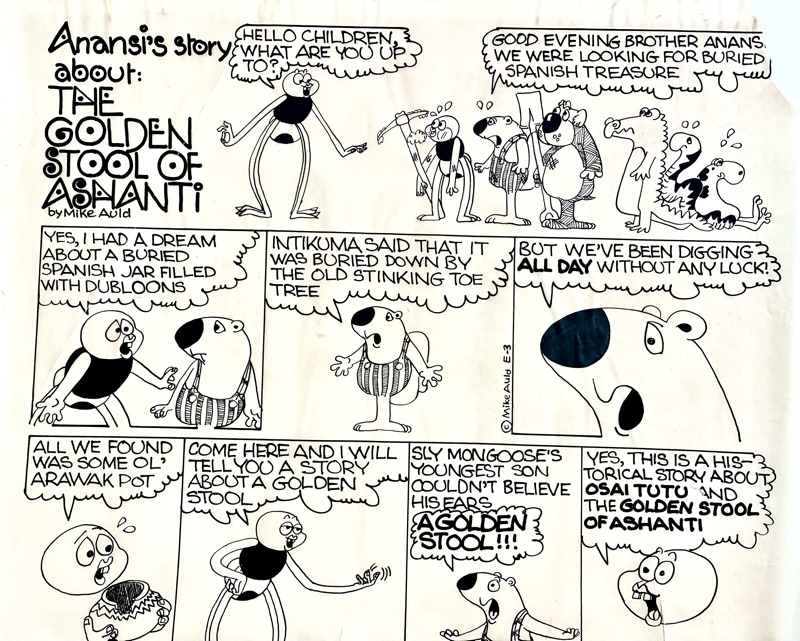


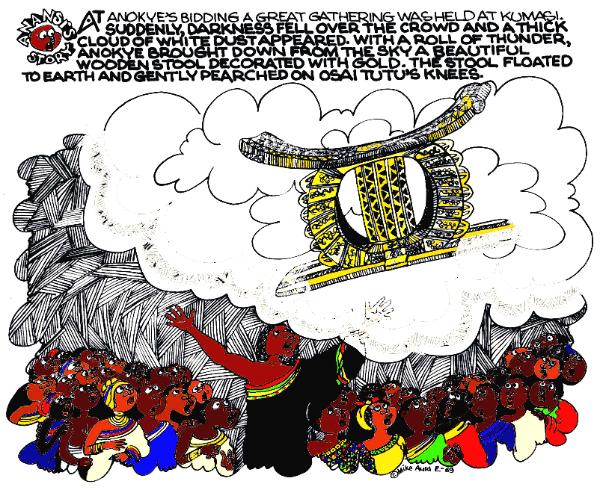
Above: As the first Asantihene or ruler and the founder of the Asanti Confederacy, Osei Tutu magically became the Devine anointed ruler of the Asanti, when a golden stool mysteriously floated down and perched on his knees, in the colorized panel below.

Story number one was the first Anansesem, an old tongue in cheek tale about survival. 


After all these years, Anansi is still with us!  
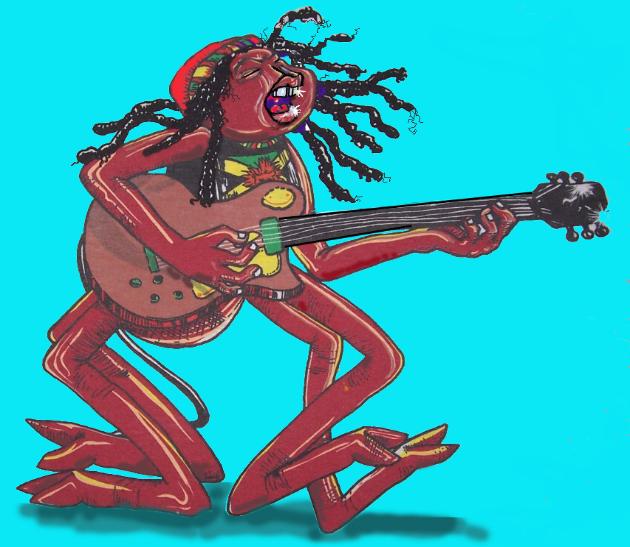


“One Heart, One Love, let’s get together and make everything alright!”  Click on Bob ‘s YouTube song:https://youtu.be/IN0KkGeEURw?si=lDde72Nh2B8A3QTo

Sunday, December 7, 2025

The Sacred Guamo Shell

Copyright 2025  by Michael Auld

The Queen Conch was an indispensable sacred instrument as well as adornment, and food sources used by the ancient Caribbean and Central American cultures. 

Aztec Conch Trumpeter (quiquizoani), Codex Magliabecchi

Aztec Conch Trumpeter (quiquizoani), Codex Magliabecchi 

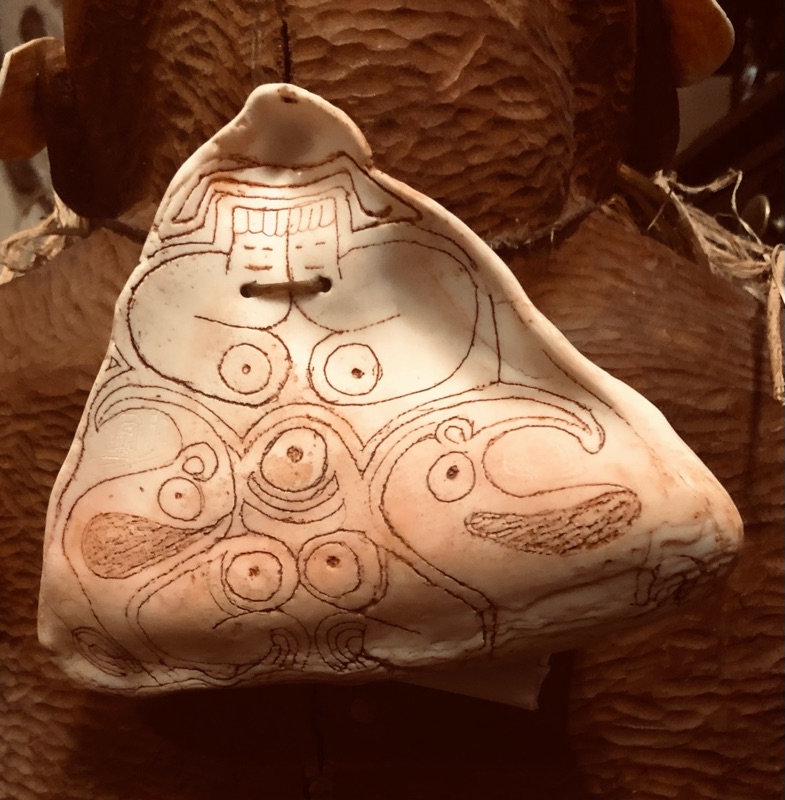
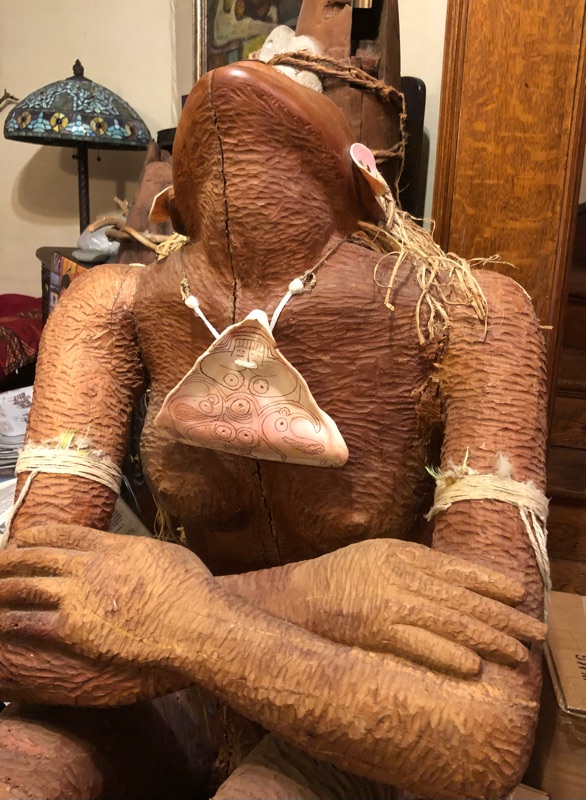
Above: The author’s incised pink Queen conch shell pendant for the Anacaona sculpture, found on a Bull Bay beach in Jamaica naturally shaped in that triangular thre-pointed shape of a sacred “cemi” icon.

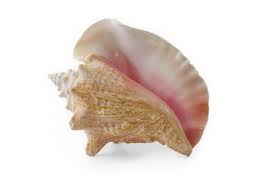
Above: A pink Queen Conch shell used by the Caribbean’s Taino and Kalinago (Carib) people for obtaining pink pearls, meat, adornment jewelry, and the Guamo trumpet.

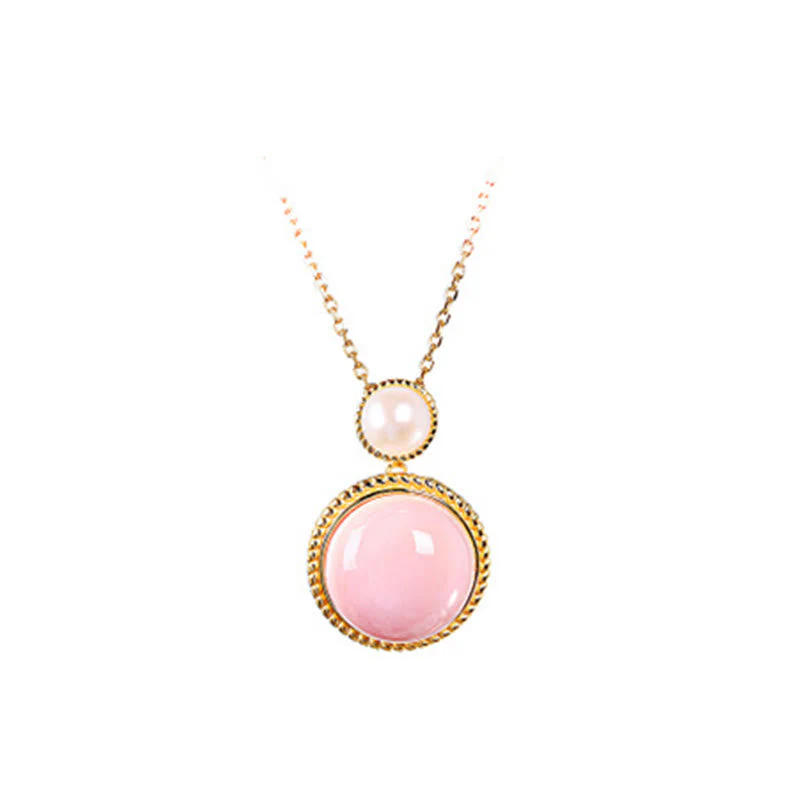
Above: Contemporary Pink Queen conch pearl jewelry.

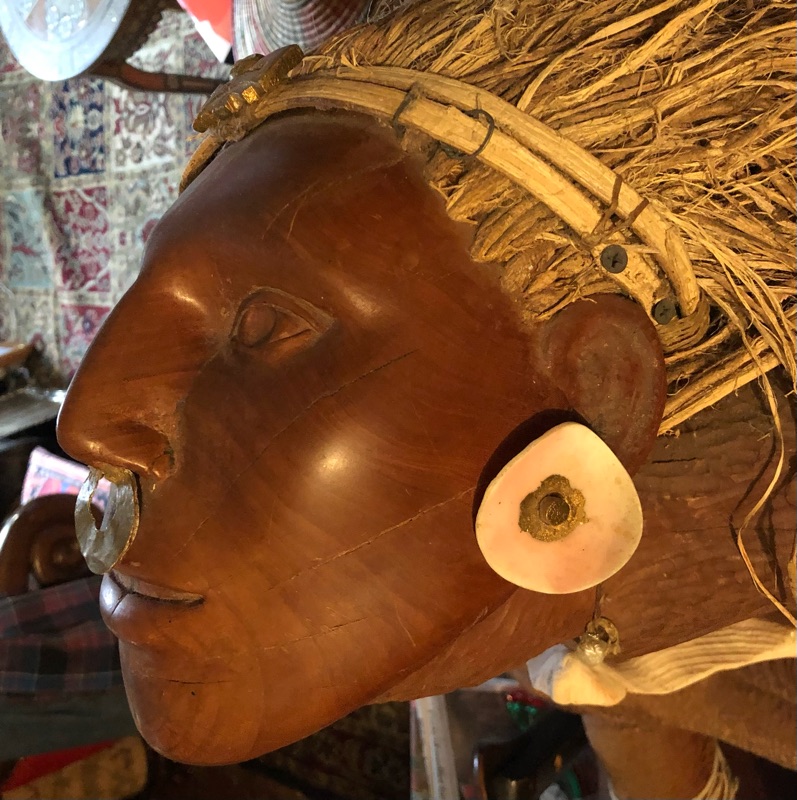
Above: The author’s “Anacaona” cherry wood sculpture with a conch shell earring.

Above: The “Anacaona” sculpture with conch shell adornments.

The Guamo is a sacred conch trumpet used in Taino spiritual events. Blown to the Four Sacred Directions upon initiating a religious event, the shell and pink pearls were cherished adornments.

“Conches are large sea snails.  True conches are from the family Strombidae, but there are a number of other large marine snails which are also colloquially called conches including horse conches (Fasciolariidae), crown conches (Melongenidae), and the “sacred chank” (a member of the Turbinellidae family)

The magnificent big pink queen conch (Lobatus gigas) from the Caribbean was used as a trumpet by the Carib, the Arawak and Taíno peoples.  In India, the shell of the big predatory sea snail, Turbinella pyrum has long been crafted into the shankha, a religious musical instrument emblematic of the Hindu preserver god Vishnu.”—Wordpress.com

THE JAMAICAN MAROONS 

The Taíno guámo (conch shell trumpet) heavily influenced Jamaican Maroons by becoming their key signaling device, the Abeng, used for communication, calling meetings, warning of danger, and even conveying individual messages, blending Taíno indigenous practices with African resistance, demonstrating deep cultural continuity and adaptation within Maroon communities for survival and organization.—AI
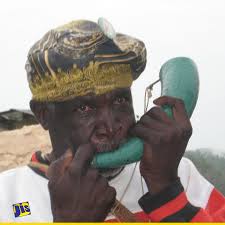
Above: A Jamaican Maroon using the Aneng made from a cow's horn. The instrument was used for both ceremony and communication against the arriving Brirish from their retreats to which enslaved Africans had fled from the sugarcane plantations, and welcomed by the Yamaye Taíno who showed the newcommers how to survive in an alien land. The Yamaye were called Cimarrones, a term meaning "Wild High Mountain" Taínos who had removed themselves from te invading Spanish cattle and horse ranches where their enslaved labor was used. Taíno gold was forcably stolen by the attacking European Iberian's who resorted to a tribute system. The system was enforced by cutting off the hands of every adult Taíno over the age of 14, if they did not deliver a set amount of gold dust every three months. 

Jamaica did not have as much gold as Cuba (Cubanakan), "Hispaniola" (a.k.a. Haiti & the Dominican Republic, or Ayti Bohio or Kiskeya), and Puerto Rico (Boriquen), so the Spanish in Jamaica resorted to cattle and horse ranches used in the invasion of Central and South America. Interestingly, the Spanish found the panning for gold technique used by the Taíno civilization, who had a coper and gold alloy called guanin, while caona was pure gold. Guanin may have been traded from mainland South America up the Caribbean's chain of islands. Guanin played an important role in the Taíno myth of twin islands of Matinino (the Island of Women) and Guanin (the Island of 14k gold), which eventually influenced the naming of "La California", a Taíno influenced Spanish novelist's tale of a mountainous island of La California, ruled by Amazons' Queen Califia, and whose warriors only had weapons of gold. The name was given to that United State by Hernan Cortez from his seeing the California mountans in Baja California in 1535, and who was very fameliar with Garci Rodriguez de Montalvo's 1510 novel. The work was based on friar Ramón Pané (Pan-aye) recording of the Taíno's Travels of Guahayona to Matinino and Guanin story, while he was in Hispaniola, and whose manuscript was sent back to Spain.  (See my blog on La California: http://yamaye-mike.blogspot.com/2018/07/taino-origins-influence-on-naming-of.html)